
Why am I missing a bad version of myself?

For as long as I can remember I have been changing. There is not a week that goes by where I am not fully conscious of who and what is changing me.
So then why do I feel so terrible about it?
My Mother had always told me “Leon, do not let anyone change you.” She would say this often; every time I got into a new relationship, felt down about my appearance, or began drifting into a new way of speaking or dressing, she’d remind me, almost warn me, that I must never lose myself. Maybe that very warning is what drives me to change subconsciously. Maybe the act of resisting change becomes its own form of transformation.
Because if I look closely, I’ve never really stayed the same for long. My voice, my face, my habits, the way I express myself, all of it keeps mutating. I used to think that meant I was growing, improving even. But lately, I’ve noticed that growth doesn’t always feel good. It can feel like grief.
It’s an odd thing, to miss a version of yourself that you once hated. The one who said the wrong things, chased the wrong people, acted from insecurity instead of confidence. There was something raw about him. Something unfiltered. He moved through life with an energy that wasn’t polished, but it was real.
Now I wonder if I’ve traded authenticity for awareness.
When I look back, I don’t exactly want to be that person again, but I want to feel what he felt. The hunger. The recklessness. The way he loved things without worrying whether he looked foolish doing it. These days, I feel more calculated. I overthink before I feel. I weigh outcomes before actions. And yet, I can’t help but miss that bad version of myself who didn’t care what he looked like in other people’s eyes.
Maybe that’s the real curse of self-awareness. You begin to monitor yourself so closely that you start living as an observer, not a participant. Every emotion gets filtered through analysis: Why am I feeling this? What does it mean? What will it lead to? You become so careful not to make mistakes that you stop moving freely altogether.
And the strangest part is, even when I look at old pictures, the ones where I look unhappy, unhealthy, even lost, I still feel a warmth toward that version of me. I think it’s because I remember how it felt to be simple. Not simple-minded, but simple in the sense of not overcomplicating everything with meaning. Life wasn’t about healing or improving or redefining anything. It was just about surviving the week.
There’s a purity in pain before it becomes wisdom.
Now, every time I feel down, I rush to fix it. I analyze, I journal, I talk, I label it as “a period of growth.” But before, I used to just sit in it. Let it ache. Let it be. I used to cry without trying to understand why. That’s the version of me I miss, the one who didn’t turn every emotion into a project.
I think we all carry ghosts of our past selves, not just the people we’ve been, but the ways we used to feel. They linger in the background, not to haunt us, but to remind us that we’re made up of every mistake, every identity, every failed attempt. And sometimes, when life feels too tidy or too structured, those ghosts knock on the walls of your mind and ask to be remembered.
Because even the versions of us that we try to bury, the insecure one, the angry one, the careless one, they all served a purpose. They carried us through moments we couldn’t have survived with logic alone. They taught us what not to do, yes, but they also taught us how to want something deeply.
Maybe I miss the bad version of myself because he didn’t pretend to have answers. He just lived. He didn’t need to justify every decision or shape every part of himself into something admirable. He was flawed in a way that was freeing.
I think about my mother again, her voice telling me not to let anyone change me. Maybe she was right, but in a way neither of us understood. Because “not letting anyone change you” doesn’t mean staying the same forever. It means not losing the core of who you are, that wild, unshaped centre that exists beneath all the learning and healing.
And maybe I haven’t lost it. Maybe it’s just quiet. Maybe it’s waiting for me to stop trying so hard to fix myself and just be again.
So yes, I’ve changed. I’ll keep changing. But I think it’s okay to grieve the versions that got left behind, even the bad ones. They’re proof that I’ve lived, that I’ve felt, that I’ve made mistakes and still kept moving.
And maybe that’s all being human really is: a constant shift between who we were, who we are, and who we’ll never be again.
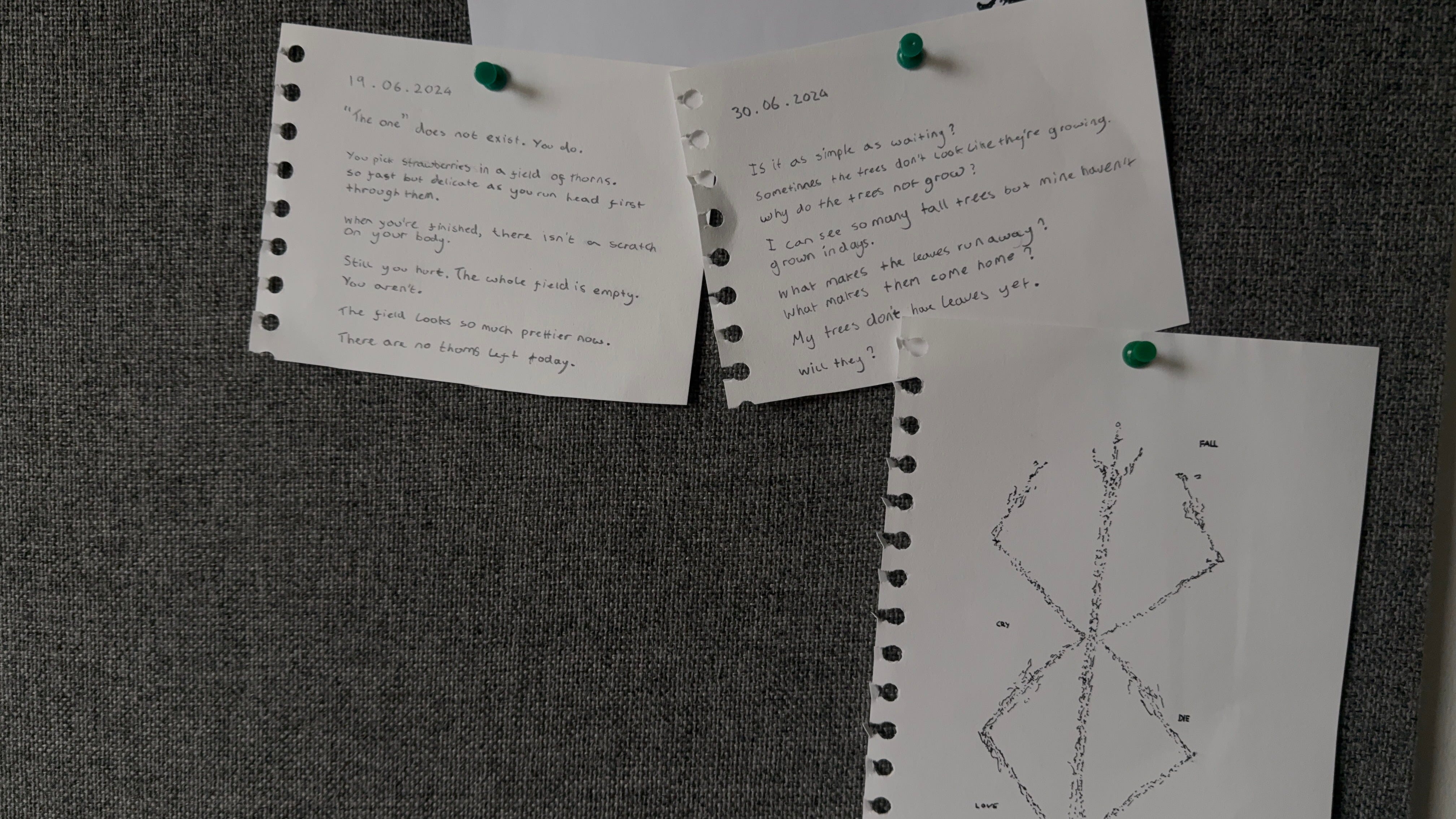
I really resonated with this. I wonder if it is just a part of the human experience, to constantly grieve change and feel nostalgic over the past.
i like this